
When I began my novel, Inland, and as I developed plot, characters, scenes, and dialogue, I referred to my manuscript as speculative fiction, and sometimes science fiction. In the world I’d created, the iPhone had been banned due to toxic rare metals that made people sick, and sea-level rise engulfed cities along the Eastern Seaboard amidst precipitation, melting glaciers, warm ocean temperatures and denial. The only novel I had read at that time that featured human-driven climate change, was T. C. Boyle’s, A Friend of the Earth (2000), a gripping, satirical novel about Ty Tierwater, an eco-activist, who battles the logging industry in the Pacific Northwest while processing family tragedies and meditating on nature’s demise from climate change. Back then, I called a novel like that literary fiction, or eco-fiction.
When my novel was accepted for publication in 2022, and I put down my pen, I finally had time to read some of the novels accumulating on my shelf that are now clearly recognizable as cli-fi (climate fiction). How do these novels differ from eco-fiction or environmental fiction that often focus on humanity’s relationship or exploitation of ecosystems or an ecosystem independent of humanity? Or dystopian or apocalyptic fiction where something out there in nature has gone terribly wrong, upsetting the human-nature balance that once made us feel safe? Simply put, cli-fi novels tell the story of a human-induced changing climate, the result of burning fossil fuels for energy. They help us make sense of the destruction of the natural world, and the unraveling that follows. Who did this? Aliens? Creatures from the deep? Um hum, no. We did, which sometimes infuses this genre with a sense of communal regret and the realization that we, some more than others, could have done better. Now it’s our responsibility to clean things up.
I would add with a caveat that many of the novels I have read in the last six months take place now, in the first quarter of the 21st century, and are set in fictional worlds that feel very much like our own. Octavia Butler’s Parable of the Sower, written in 1993, tells the story of the rapid collapse of social order, set between the years 2024-2027; Boyle’s A Friend of the Earth takes place in 2025; Kim Stanley Robinson’s The Ministry for the Future, a harrowing story of a heat wave in India and its aftermath, is set in 2025; Lily Brooks-Dalton’s The Light Pirate, set in a Florida ravaged by hurricanes, does not mention dates. However, after publishing the novel in 2022, Brooks-Dalton said: “this is today.” Likewise, my novel, Inland, takes place in 2026, a date I chose specifically as an in-between time, a twilight where the road is getting darker but there is still enough light to see.
There is an urgency in cli-fi to step outside the fictional framework, back into our world, to do something to make things better. Stanley Robinson’s book features a UN ministry (for the future), a kind of subsidiary to the Paris Accords, that will mitigate the changing climate’s effect on future generations. Brooks-Dalton’s protagonists learn to adapt to rising water, Butler’s protagonist has packed a survivalist’s emergency bag and left in by the door so that she can grab it (and does) when it’s time to head for the hills. In Inland, my character, Billy, keeps an emergency check list inside his closet door, “because the climate is messed up,” and he has a feeling he’ll need it (which he later does). Pondering the competitiveness in his public school and the unrelenting pressure to score high on SAT’s with no scholastic interest training in practical survival skills, Billy asks: “Why aren’t schools preparing us for this shit? How to forage and purify dirty water?”
The jury is still out on whether cli-fi can help us adapt and mitigate, nudge us to do something outside the realm of art, turn on the headlights before we skid in the dark and hit the guardrail.
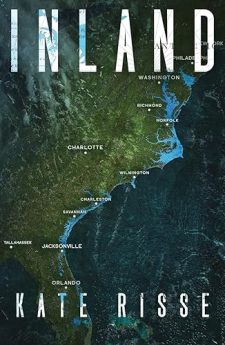
Inland is a harrowing account of separation and resilience as two families struggle to reunite after the Eastern Seaboard succumbs to catastrophic flooding.
Trapped in the rapid floodwaters, Juliet and Martin search for a viable way back to Boston while their children face their own challenges for survival in the rising seas. This intense tale of endurance and hope examines the human connection and the unpredictable role of technology in a warming world.
Publisher : 12 Willows Press (June 15, 2024)
Paperback : 367 pages
ISBN-10 : 1961905078
ISBN-13 : 978-1961905078



Leave a Reply