
I’ve been writing horror fiction for about six years and reading it ever since my dad took his eye off his Stephen King shelf for that bit too long. After all these years, something that still amazes me is the overly simplistic view of the genre which pervades the collective consciousness: horror is only about scares.
I’ve even seen people marking down horror reads they’ve enjoyed purely on the basis of them not being scary enough!
Now, don’t get me wrong, there are purveyors of fear like Adam LG Nevill out there creating the most compelling, expertly written nightmare fuel you could ever wish to lay your hands on. But to imagine this is the only role horror can take on as an art form is to miss the point.
What really crystalised this point for me was in listening to the writer of horror and weird fiction, Simon Strantzas on Episode 234 of the This is Horror podcast. He described horror as less a genre per se and more a lens through which the reader and/or writer views the world. In this way, we can look beyond fear alone as the ingredient which marks out horror and look for the many other examples of the horrific.
A great example of this—and a sub-genre which has exploded in recent years, especially among writers such as Laurel Hightower and Catherine McCarthy—is grief horror. Their recent novellas, Crossroads and Immortelle respectively, deal with loss, grief and ‘hauntings’ of a fashion which can only be described as truly horrific, without ever setting foot on ‘scare’ territory. Each of them deals gut-churning dread through their protagonists’ experiences of loss, which could rival any scene of monstrous bloodshed.
Beyond this, there are apocalyptic works such as Dave Jeffery’s A Quiet Apocalypse series, The Walking Dead (and even, arguably Cormac McCarthy’s The Road), in which the horror comes not from scares, but rather the raw, unsanitised look at what humanity is capable of at its worst.
As one final example, we might take the sub-genre of weird fiction, within which fear is eschewed in favour of a general sense of unease or dread which permeates everything, as in the work of the aforementioned Simon Strantzas or Michael Griffin, among many others.
Bearing all this in mind, when writing my own horrors, I try to avoid falling into the trap I may have done earlier in my writing career. That is to ask myself whether what I’m writing is ‘horror enough.’ All too often, I found that internal dialogue to be similarly focussed on the fear debate.
Now, when I set out to write and, in the later stages of drafting, to evaluate and edit what I’ve already created, I instead ask myself about what kind of emotional reactions the story generates in me. In my recent novella, Below, there were absolutely moments when I wanted terror to take centre stage in the reader’s mind. But, equally, there are other themes at play around loss and discrimination, both of which I hope generate equally horrific, emotive reactions.
As writers working within the horror genre, it is our choice whether we choose to shock, to paint the page crimson with visceral bloodshed, or to take more of a ‘quiet horror’ approach. I would argue that the emotional gut punch of a fine work of grief horror, or the elevated heartrate of the reader as they navigate their way through a weird fiction piece in which everything feels off somehow, are equally horrific and equally valid goals for the horror creator.
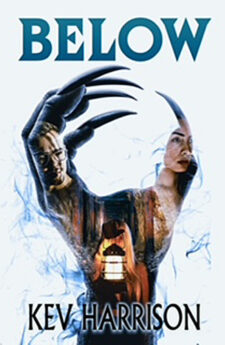 Below by Kev Harrison
Nick has revered his grandfather his entire life. The absent hero, his namesake, buried alive in his final act of courage an ocean and thousands of miles away. Jess has outgrown her status as an all-action social media celebrity and the endless demands that come with it.
Adventure Travel TV has thrown this unlikely duo together, promising Jess the launchpad she craves and Nick the chance to tell his grandfather’s story first-hand, in the newly uncovered mine that still holds his remains from the twilight days of the gold rush.
Is it a dream come true or a nightmare as someone or something stirs…BELOW.
Publisher : Silver Shamrock Publishing (August 17, 2021)
Paperback : 154 pages
ISBN-10 : 1951043383
ISBN-13 : 978-1951043384



Leave a Reply