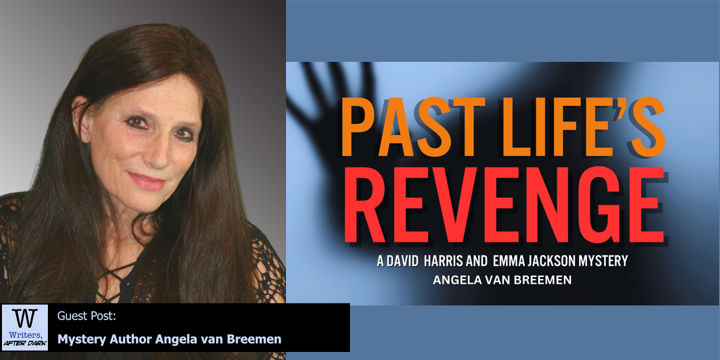
Recently, I had the honour to be one of the panelists at the Bony Blithe Mini-Con in Toronto. The topic for this panel was very intriguing: Artistic License vs Reality Check.
While preparing for the panel discussion, I recognized the complexity of this question, and that this subject required careful consideration since there may be times when an author may need to fudge the facts a bit to move the story forward.
Whenever possible, I strive to find a way to use real facts so that the trust that a reader places in me and my story retains its integrity. My concern is that inaccurate facts can distract the reader from the plot.
On the other side of this debate, artistic license does tie into our reliance for the reader to suspend their disbelief and to temporarily accept events or characters that conventional wisdom would otherwise consider unbelievable.
There are times when a fiction writer needs to take liberties, for example most readers are forgiving if tinkering with the facts creates tension or pacing.
Examples would be the protagonist who continues to fight the bad guys even though he’s been stabbed or shot repeatedly or if you have a historical setting with real life characters engaging with your fictional character.
A great piece of advice I learned from author Judy Penz Sheluk, during one of her seminars, is the use of imaginary places. This provides the author with the freedom to invent streets, restaurants, hotels, and locations. It gives the reader and the writer permission to relax into the story and enjoy the narrative.
In my novel, Past Life’s Revenge, New Elgan is a fictitious small town that could be based on any small Southwestern or Central Ontario town.
In addition, although I did a lot of research about police departments, I am not a police procedural writer. By inventing the New Elgan Police Service and modeling this department after various real-life Canadian police departments I was able to portray realistic characters and situations.
If what is presented to the reader comes across as authentic, they will be more likely to accept the narrative unless the details are really wrong because it contradicts universal wisdom or if it promotes misinformation. One persistent inaccuracy is when a protagonist gives a stray cat a bowl of milk. Cats are lactose intolerant and can become extremely ill when consuming too much milk.
With so much fake news circulating nowadays, I believe as authors, we have an obligation to expose untruths, thus providing an anchor to our readers to help navigate through this crazy world of real-life fiction.
Facts from which I believe one should never deviate would be altering true historical facts unless it is clear to the reader that the story is in an alternate reality. Also, medical or legal details should be factual.
We also need to handle our stories with grace and sensitivity. For example, if one writes about a person from a diverse background, then one should ensure every effort is made to understand their community. It is a matter of respect.
In my second book, Revenge is Not Enough, expected to be released in the Fall of 2025, the issues of modern-day slavery are the central theme of my story. Megan’s sister, Maggie, went missing ten years earlier and a message from beyond the grave prompts paranormal crime investigators Emma and David to find out what happened to her.
In my story, Megan, who is Emma’s best friend, identifies as non-binary. I discuss how the concept of a third gender is not a new, Western concept but steeped in centuries of history amongst many cultures.
For example, the Zapotec cultures of Oaxaca in southern Mexico recognize a third gender whom they call muxes. The person is male at birth but dresses and behaves in ways otherwise associated with women. People who have a muxe in their family consider this good luck and muxes are honored and revered in their culture. Even the Catholic Church within their community recognizes these unique individuals.
Whenever possible, I think it is advisable to infuse reality and the social issues we face everyday into one’s story to add an extra layer of credibility. This approach could go far toward educating and promoting tolerance and acceptance toward all human beings. As authors, we have an obligation to promote this truth and transparency.
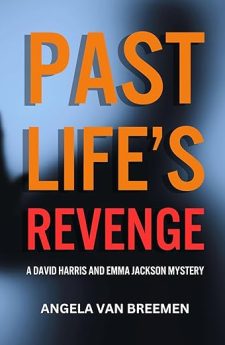 Past Life’s Revenge: A David Harris and Emma Jackson Mystery (A David Harris and Emma Jackson Mystery Series) by Angela van Breemen
Have you ever had a dream that was so real, you were sure it was from a past life?
Since childhood, David Harris has suffered from debilitating nightmares. He has sought the advice of psychiatrists and other health professionals without obtaining any relief. When he meets an attractive young psychic, Emma Jackson, she encourages him to seek the help of her friend Anna Tungsten, a hypnotherapist. During an emotionally charged past life regression, David learns he was murdered in his most recent past life, thirty years earlier. When David realizes his murderer is still alive, he cannot move on and build a new life with Emma until he has exacted revenge and stopped the murderer from killing again.
Publisher : Iconic Scribes Press Inc. (July 9, 2024)
Hardcover : 342 pages
ISBN-10 : 1738313018
ISBN-13 : 978-1738313013